Small vs. Big: Why Smaller Memory Care Homes Often Offer Much Better Dementia Care
Business Name: Beehive Homes of Sandy
Address: 9532 S 700 E, Sandy, UT 84070
Phone: (801) 975-5244
Beehive Homes of Sandy
BeeHive Homes of Sandy provides personalized assisted living and memory care in a comfortable residential setting. Our compassionate caregivers deliver attentive daily support focused on dignity, independence, comfort, and quality of life.
9532 S 700 E, Sandy, UT 84070
Business Hours
Families typically start checking out memory care after something concrete takes place. A parent roams out during the night. Medications get blended. A fall ends up being the third journey to the ER in six months. What appeared like regular aging unexpectedly seems like dementia care, and the stakes get extremely real.
That is generally when the huge concern arrive on the table: a large assisted living neighborhood with a memory care wing, or a smaller sized, home-style setting that concentrates on dementia?
I have walked households through both options for years. I have actually sat at cooking area tables after a roaming occurrence, and in conference spaces with marketing directors from big senior care chains. Huge neighborhoods and small homes both have their location, and neither is automatically "great" or "bad". Still, in numerous scenarios, smaller memory care homes quietly provide much better results, especially for people with moderate dementia.
The factors are not abstract. They appear in who notifications a urinary tract infection early, who catches that Dad has actually stopped consuming, and who has the time to stand calmly with a frightened resident at 2 a.m. The size of the setting shapes those moments.
What households discover first when they walk in
When I tour with families, I watch their faces throughout the very first sixty seconds. You can learn a lot before anyone states a word.
In a big assisted living neighborhood with a protected memory care unit, you frequently go through a lobby that looks like a hotel. High ceilings, huge chandeliers, broad corridors. By the time you reach memory care, you have actually walked a good range. The front door opens to a long corridor, a central sitting area, and numerous side halls. Activity depends upon the time of day. Some residents circle the system, some sit in recliners, a few ask how to get home.
In a smaller sized memory care home, specifically the residential-style ones, you usually step straight into the primary living area. You can often see almost the whole space: kitchen area, dining table, sitting location, in some cases a little yard through a glass door. Staff remain in the middle of it, not hidden at a desk. Noise tends to be lower. The whole setting feels more like a shared home than a facility.
Families often state the same two aspects of little homes on that first visit. First, "I seem like Mom would really be seen here." Second, "I could visualize us having Sunday lunch at this table."
Those instincts are not sentimental. They point toward structural distinctions that matter, both medically and emotionally.
How size shapes every day life in memory care
Dementia narrows a person's world. New information is more difficult to process and keep. Big, intricate environments puzzle and fatigue individuals who as soon as browsed airports and office parks without a second thought. An individual with dementia will typically do finest in a simpler, more foreseeable setting.
In a big memory care unit, there might be 25 to 60 citizens, with multiple corridors, activity rooms, and shared areas. Personnel projects alter by shift. The activities calendar is typically full on paper: bingo, crafts, entertainment, workout. In practice, involvement differs widely. Homeowners who can still initiate and follow group hints might benefit from larger, structured activities. Those further along in their illness may rest on the edges or remain in their rooms.
In a little memory care home, you may have 6 to 16 citizens, all sharing the exact same open living and dining spaces. Staff normally support everybody, not just "their side of the hall". Activities tend to be woven into normal household routines instead of standing alone as events. Folding laundry, stirring a pot of soup, deadheading flowers on the patio, wiping the table, or sorting buttons can all end up being meaningful engagement.
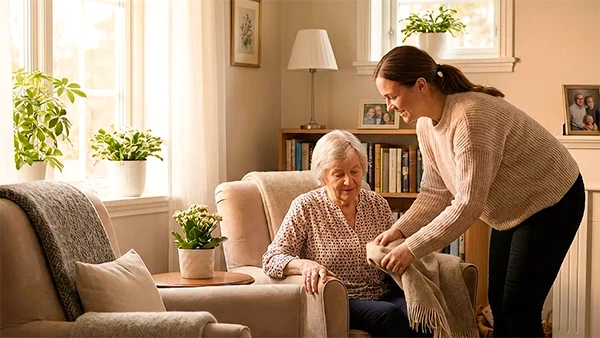
One afternoon in a ten-resident home, I saw a caretaker spontaneously turn mail delivery into an activity. She handed envelopes to a resident who had been a secretary and asked her to "assist arrange the mail like you used to at the office". For twenty minutes, that resident was focused, purposeful, and smiling. In a larger setting with 40 citizens, that kind of modification is harder to manage regularly. Staff should move quickly and cover more ground.
Daily life also looks different in little homes when it pertains to pacing. Big communities tend to operate on tight schedules driven by staffing patterns, dining service, and transportation. Breakfast might be "served from 7 to 9", however in truth, hot food is most convenient early in the window. Bathing gets slotted into particular hours. The pressure of "getting everyone done" is real.
Small homes have their own limits, however they frequently flex around the rhythms of the residents more quickly. If somebody wakes later and chooses to consume at 10 a.m., it is usually easier to cook eggs for a single person in a little, open kitchen than to reopen a commercial-style dining-room. That versatility can imply less fights over showers and meals, and less agitation throughout transitions.
Relationships, staffing, and connection of care
Ask any experienced dementia care expert what makes or breaks quality, and eventually they return to staffing. Ratios matter, however continuity and relationship depth matter even more.
In a large memory care system, the official staffing ratio might look comparable to a small home on paper. For instance, 1 caregiver for every 6 to 8 homeowners during the day. The distinction is the number of overall people cycle through the unit. Big neighborhoods often have a much deeper bench of part-time and float personnel, which assists them cover call-outs but likewise increases turnover at the bedside.
Residents with dementia battle to acknowledge and trust new faces. If the caregiver aiding with an intimate job like toileting or bathing changes every few days, resistance typically climbs up. That causes more time invested handling "behaviors" and less time on assuring, familiar routines.
In smaller memory care homes, staffing rosters are often shorter and more stable. The very same 3 or 4 caretakers might cover most daytime shifts for months or years. Owners or managers are typically present on site, not in a far-off corporate office. I have actually seen homeowners greet a small home manager like an extended family member, and I have seen that supervisor quietly step in to assist feed lunch when a shift runs tight.
Smaller scale likewise changes how rapidly personnel notice difficulty. In a ten-resident home, it is obvious if somebody has not concern the table or has left half their meals untouched for two days. Subtle shifts in gait, state of mind, or alertness stand out. In bigger units, those modifications are much easier to miss in the middle of the flow of 30 or 40 people.
I as soon as spoke with on a case where an early urinary system infection was picked up in a little home because a caregiver noticed that a resident was a little more withdrawn and had gone to the restroom three additional times that morning. The caretaker knew this female's regimen that well. In a huge unit, where personnel are responsible for a lot more citizens spread over a broad area, those delicate patterns can vanish in the crowd.
All that stated, little homes are not instantly better staffed. Some cut corners and run too lean, particularly at night. Families should constantly ask to see real staffing schedules, compare day, evening, and over night coverage, and listen thoroughly to how caregivers speak about their workload.
Environment, sensory load, and "feeling lost"
People with dementia work hard throughout the day to understand their environments. A high-stimulation environment can tip them into confusion or agitation, even when nothing "bad" is happening.
Large assisted living and memory care buildings tend to be loud and visually hectic. Overhead statements, Televisions, individuals talking in corridors, deliveries, vacuum cleaners, kitchen area clatter, beeping gadgets, and the echo of large spaces all blend together. Include complex layout with identical doors and long hallways, and lots of homeowners feel lost even with personnel close by.
That sense of being lost matters. When somebody can not anchor themselves to a mental map, they ask more repetitive concerns, wander more, and often feel more nervous. Personnel then invest much of their time rerouting or reassuring in a setting that continuously damages that reassurance.
Smaller memory care homes typically have simpler designs and a lower sensory load. A resident can typically see the kitchen area, the front door, and the backyard from a single chair. Ambient noise tends to be restricted to discussion, a TV in one corner, and ordinary family noises. Some homes keep the television off except for particular programs, which significantly silences the space.
I remember one guy with moderate dementia who had actually been pacing endlessly and calling out for his wife in a large memory care unit. Staff did their best, however he was overstimulated and frightened. When he transferred to a twelve-bed residential home, he still paced, but the route was brief, familiar, and anchored by the dining table and back entrance. Within 2 weeks, his consistent calling out had dropped greatly. Nothing magic had altered in his brain, however the environment no longer provoked the same level of distress.
For individuals with advanced dementia, the scale of space matters even more. Being able to move freely within a little, safe, and consisted of environment may be much better than living in a big system where doors and alarmed exits need to continuously be managed. Small homes can in some cases produce safe outside access more quickly, because they may have a single fenced yard instead of numerous patios off long corridors.
Managing behavioral signs and safety
Safety is usually leading of mind for families considering memory care. Roaming, falls, aggression, and resistance to care are genuine issues. Size influences how these issues are handled.
In bigger neighborhoods, security systems are typically more sophisticated. Door alarms, wander-guard bracelets, coded elevators, and several personnel on each shift offer layers of defense. Policies are well documented, training programs are standardized, and there may be committed nurses on website all the time, particularly in larger senior care schools that combine assisted living and experienced nursing.
The trade-off is that responses can become more procedural and less customized. A resident who declines a shower may be put on a "habits strategy" that involves structured attempts at particular times, with paperwork requirements that strain already restricted personnel time. Medication changes might be rolled out by means of consulting psychiatrists or telehealth, with varying degrees of follow-through.
In little homes, security relies more heavily on direct observation and familiarity. Caregivers generally know who tends to check doors, who gets up at night, and who needs closer watch after a family visit or medical procedure. Interventions can be subtle and relational: shifting a seat at the table, adjusting lighting at night, or offering someone a "job" at a particular time of day when they usually become restless.
That flexibility in some cases translates into less psychotropic medications. A resident who may have been identified "exit seeking" in a large system may be manageable in a little home through structured walking, individually reassurance, and an easier environment. I have actually seen antipsychotic and sedative doses minimized or gotten rid of after such moves, though this constantly needs mindful medical supervision.
There are limitations. If an individual's habits become physically harmful, or if they need complex medical interventions, a larger setting with more specialized resources may be much safer. Families must prevent assuming that "homey" constantly equals "able to handle anything."
When larger memory care or assisted living might be a better fit
It is easy to romanticize small memory care homes. Lots of are worthy of that affection, however they are not the very best choice for every single situation.
Large assisted living communities and memory care units can be a better fit in several scenarios. An individual in the very early stages of dementia who still prospers on diverse activities, bigger social circles, and amenities like fitness rooms and scheduled getaways might actually feel more taken part in a larger setting. They may delight in restaurant-style dining, clubs, and a calendar filled with options.
Larger neighborhoods likewise tend to have more on-site scientific assistance. Some have 24/7 nursing coverage, checking out physicians several days a week, on-site physical and occupational treatment, and developed relationships with healthcare facilities and hospice firms. For residents with several intricate medical conditions on top of dementia, that facilities can matter.
Families in some cases find that large communities are much better geared up for respite care as well. Short-term stays, maybe after a hospitalization or while a primary caretaker takes a break, are often simpler to set up in bigger settings that have a consistent flow of admissions and discharges. A small home might just have an opening once or twice a year, and might prioritize long-lasting placements over respite.
Finally, expense structures vary. While small homes are sometimes cheaper than high-end assisted living, they can also be pricier on a per-resident basis due to the fact that economies of scale are restricted. A very tight budget may push families toward bigger communities that can spread out fixed expenses across numerous residents.
The choice is seldom basic. It helps to be explicit about your loved one's particular requirements, instead of presuming that a person design is superior in all respects.
Cost, guideline, and what "small" really means
The words "little memory care home" cover numerous various designs, each with its own regulative and monetary realities.
In many states, residential care homes operate under the very same license category as assisted living, simply on a smaller scale. A single-story house might be renovated to serve 6 to 12 residents, with security upgrades and professional personnel. Other states have particular classifications for "adult household homes" or "board and care homes." Some little homes run as dedicated memory care, while others serve a mix of citizens with and without dementia.
Regulations in the United States usually set minimum staffing, security, and training requirements, but enforcement quality differs. I have actually seen small homes that surpass every standard and feel like extended households. I have likewise seen little homes that feel under-resourced, isolated, and poorly supervised. A warm environment can conceal serious problems if families do not look under the hood.
Large memory care units within assisted living neighborhoods or senior care campuses are typically based on the very same licensing, however they gain from business compliance departments, standardized policies, and internal audits. They can purchase personnel training programs that smaller operators can not easily duplicate. On the other hand, business priorities might emphasize occupancy and margins, which can form day-to-day truths in ways families never ever see.
Financially, small memory care homes frequently charge all-encompassing month-to-month rates for space, board, and care, with occasional add-ons for extremely high needs. Big communities more frequently use tiered prices, where base rent covers housing and meals, and care is billed at various levels depending on just how much support a resident needs. Comparing expenses can be tricky, because you are often looking at various rates models and service bundles.
What "little" implies in practice also matters. A 16-resident home with a thoughtful design and well-trained staff can feel much easier to browse than a vast 30-bed system, but a badly run 8-bed home can feel chaotic if staffing is thin. Size develops possibilities; it does not guarantee outcomes.
How smaller sized homes support families in addition to residents
Families often ignore how much their own quality of life will depend on the environment they choose for memory care or assisted living. A small home's effect on family stress can be substantial.
Communication is typically more direct in small settings. The individual responding to the phone may be the very same caregiver you satisfied at admission, and they likely know precisely what occurred with your loved one that morning. There is less danger of messages getting lost between shifts, and household concerns normally reach the decision-maker quickly.
Families likewise tend to feel more welcome in small homes. Bringing in a homemade cake, joining a meal, or sitting quietly in the living room for an hour feels natural. Children and pets frequently integrate more easily. That sense of being part of a prolonged household can reduce the guilt many adult kids carry when moving a parent into senior care.
In bigger neighborhoods, households can certainly develop strong relationships with staff, but they often must navigate more layers: front desk, nurses, care managers, activity staff, administration. The upside is access to more formal family conferences, support system, and resources. The downside is that it may feel more like communicating with an organization than with a household.
I worked with one daughter who moved her mother with sophisticated dementia from a 60-bed memory care system to an eight-bed home better to her own house. She told me 3 months later on, "I still visit 4 times a week, however I no longer spend the drive stressing over what I am going to find. I understand the people there. They notice the little things. I can just be her daughter once again rather of her case supervisor."
That shift from consistent oversight to shared trust is among the peaceful gifts of a well-run small home.
Signs a smaller sized memory care home may be the better fit
Below are patterns I watch for when recommending families focus on smaller sized memory care settings:
- Your loved one becomes easily overwhelmed by noise, crowds, or intricate spaces.
- They remain in the middle or later stages of dementia and no longer take advantage of large-group activities.
- They react strongly to familiar regimens and one-on-one reassurance.
- You value becoming part of a close-knit care group and desire frequent, casual updates.
- You are comfortable with a "household" feel rather than hotel-style amenities.
If numerous of these ring true, an excellent little home can frequently provide calmer, more tailored dementia care than a big facility, presuming both are well run.
Questions to ask when visiting little and big memory care options
Whatever setting you lean toward, the quality of dementia care boils down to specifics. Utilize these questions to penetrate beyond the pamphlets when you visit:
- How many caretakers are on task during days, nights, and nights, and how frequently do tasks change?
- Who decides when to call the physician, change medications, or include hospice, and how are households included?
- How do you deal with a resident who refuses bathing, medications, or meals, specifically if this occurs repeatedly?
- What does a normal day look like for someone at my loved one's level of dementia, from awakening to bedtime?
- Can you tell me about a time when something went wrong here, and what you altered afterward?
Listen not just to the content of the responses, but to their tone. Individuals who really understand dementia care will speak concretely about trade-offs, limitations, and real examples. They will not pretend that your loved one will "never fall" or "constantly be happy" in their care.
Choosing between a little memory care home and a bigger assisted living neighborhood is less about square footage and more about fit. Dementia compresses an individual's world. The right setting brings back as much safety, convenience, and significance as possible within that smaller space, for both the resident and the family.
For many individuals with dementia, smaller sized memory care homes tilt the balance in their favor. They simplify the environment, deepen relationships between staff and citizens, and enable senior care to feel individual at a phase of life when so beehivehomes.com memory care sandy ut much else is slipping out of reach. The secret is not size alone, however how well individuals inside that space comprehend the truths of dementia and devote to strolling that roadway with you.
Beehive Homes of Sandy provides assisted living care
Beehive Homes of Sandy provides memory care services
Beehive Homes of Sandy provides respite care services
Beehive Homes of Sandy supports assistance with bathing and grooming
Beehive Homes of Sandy offers private bedrooms with private bathrooms
Beehive Homes of Sandy provides medication monitoring and documentation
Beehive Homes of Sandy serves dietitian-approved meals
Beehive Homes of Sandy provides housekeeping services
Beehive Homes of Sandy provides laundry services
Beehive Homes of Sandy offers community dining and social engagement activities
Beehive Homes of Sandy features life enrichment activities
Beehive Homes of Sandy supports personal care assistance during meals and daily routines
Beehive Homes of Sandy promotes frequent physical and mental exercise opportunities
Beehive Homes of Sandy provides a home-like residential environment
Beehive Homes of Sandy creates customized care plans as residents’ needs change
Beehive Homes of Sandy assesses individual resident care needs
Beehive Homes of Sandy accepts private pay and long-term care insurance
Beehive Homes of Sandy assists qualified veterans with Aid and Attendance benefits
Beehive Homes of Sandy encourages meaningful resident-to-staff relationships
Beehive Homes of Sandy delivers compassionate, attentive senior care focused on dignity and comfort
Beehive Homes of Sandy has a phone number of (801) 975-5244
Beehive Homes of Sandy has an address of 9532 S 700 E, Sandy, UT 84070
Beehive Homes of Sandy has a website https://beehivehomes.com/locations/sandy/
Beehive Homes of Sandy has Google Maps listing https://maps.app.goo.gl/gxoX9vT5PFH9mJTP9
Beehive Homes of Sandy won Top Assisted Living Homes 2025
Beehive Homes of Sandy earned Best Customer Service Award 2024
People Also Ask about Beehive Homes of Sandy
What does assisted living cost at BeeHive Homes of Sandy?
BeeHive Homes of Sandy offers all-inclusive assisted living pricing. That means one straightforward monthly rate covering personal care, home-cooked meals, housekeeping, laundry, and daily support, with no hidden costs or surprise fees. Because we offer seasonal pricing and current availability can change, we invite families to call for up-to-date rates and any current offers. Before move-in, our team completes a personalized assessment of health, mobility, medication, and activities-of-daily-living needs, so we can confirm the right care plan and share clear pricing for your family.
Can residents remain at BeeHive Homes as their care needs change?
Yes. In almost all cases, residents can remain at BeeHive Homes of Sandy as their care needs change, aging in place in a familiar, homelike environment. Because we coordinate with third-party home health and hospice providers, residents can receive added care right in the home rather than relocating. It is very rare for a resident to need to move, and that typically happens only when someone requires continuous skilled nursing or hospital-level care beyond what an assisted living or memory care home can safely provide.
Is a nurse available at BeeHive Homes of Sandy?
Yes. BeeHive Homes of Sandy has a nurse who provides day-to-day oversight of residents and works directly with each resident's own physicians and healthcare providers to continue the best possible care. Residents may keep seeing their preferred doctors, and when ordered by a medical provider, home health, therapy, or hospice services can often be delivered directly in the home. Caregiver support is available 24 hours a day.
What are the visiting hours at BeeHive Homes of Sandy?
Visit anytime. At BeeHive Homes of Sandy, we would rather family come too often than not often enough, because strong family relationships are an important part of every resident's well-being. We simply ask that visits be respectful of the other residents who live here, along with each resident's meals, rest, and care schedule. If you would like to come very early or very late, just let us know in advance and we will make it work.
Are rooms available for couples at BeeHive Homes of Sandy?
BeeHive Homes of Sandy may have room options for couples who wish to remain together while receiving senior care. Availability depends on current openings, room size, and the care needs of both individuals. Please contact our team to discuss available accommodations and find the best fit for your family.
What services are provided at BeeHive Homes of Sandy?
BeeHive Homes of Sandy provides personalized assistance with bathing, dressing, grooming, mobility, medication management, meals, housekeeping, laundry, and other activities of daily living. Residents also enjoy private rooms, home-cooked meals, engaging senior activities, and caregiver support available 24 hours a day, all in a smaller, residential-style setting that feels like home.
Does BeeHive Homes of Sandy offer memory care and respite care?
Yes. BeeHive Homes of Sandy offers both memory care and assisted living. Our memory care supports residents living with Alzheimer's disease, dementia, or other cognitive changes. Short-term respite care is also available for recovery periods, caregiver relief, or families who want to experience BeeHive Homes before considering a long-term move. Availability and suitability are determined through an individual assessment.
How can I schedule a tour of BeeHive Homes of Sandy?
Call (801) 975-5244 to schedule a tour of BeeHive Homes of Sandy anytime. A personal visit is often the best way to experience our calm, homelike atmosphere, meet our caregivers, see the private rooms and shared spaces, and ask questions about assisted living, memory care, or respite care in Sandy, Utah. We would love to help you decide whether BeeHive Homes is the right next step for someone you love.
Where is Beehive Homes of Sandy located?
Beehive Homes of Sandy is conveniently located at 9532 S 700 E, Sandy, UT 84070. You can easily find directions on Google Maps or call at (801) 975-5244 Monday through Sunday Open 24 hours
How can I contact Beehive Homes of Sandy?
You can contact Beehive Homes of Sandy by phone at: (801) 975-5244, visit their website at https://beehivehomes.com/locations/sandy/
Conveniently located near Beehive Homes of Sandy Megaplex Sandy a great movie theater with full food & drink menu. Catch a movie and enjoy some great food while you wait.